Microsoft has confirmed retirement dates for three services that platform teams use every day. None of them are urgent this week. All of them need a plan this quarter, because one comes with no like-for-like replacement and another affects a large share of Java estates on Azure.
The three dates
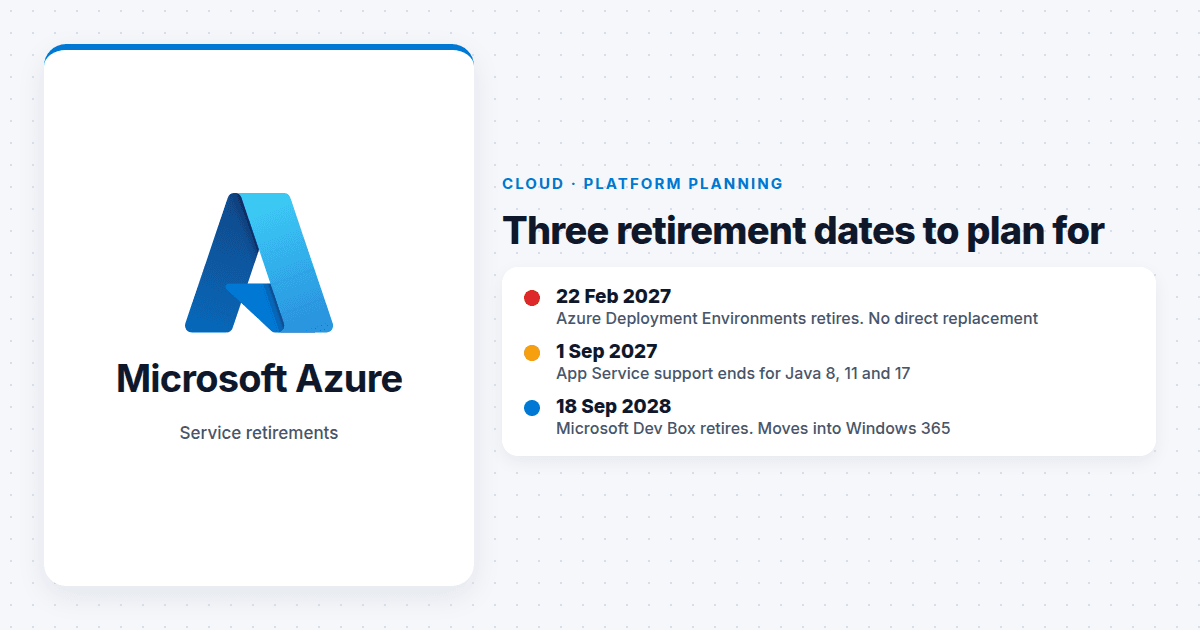
- 22 February 2027: Azure Deployment Environments (ADE). From this date, creating, deploying and redeploying environments is expected to be blocked. Reading, logging and deleting will stay available for a limited clean-up period.
- 1 September 2027: Java 8, 11 and 17 on Azure App Service. Apps will keep running, but security updates and Microsoft support for those versions stop. The notice was published on 6 October.
- 18 September 2028: Microsoft Dev Box. Microsoft stopped taking new Dev Box customers in November 2025 and is folding its developer features into Windows 365.
Deployment Environments: the hard one
ADE let platform teams publish approved templates so developers could spin up their own test and demo environments without opening a ticket. Many teams built their internal developer platform around it.
Microsoft's retirement guide does not offer a single successor. It points teams to three routes: deploying with Bicep or ARM templates directly, using Azure Verified Modules as governed building blocks, or wiring provisioning into Azure DevOps or GitHub pipelines. The guide also notes that none of the third-party tools it looked at directly support the same Bicep and ARM lifecycle.
In plain terms, the self-service layer goes away and you rebuild it yourself, or you buy something new. That is a platform decision, not a migration task.
Two warnings from the guide are worth repeating. ADE environments do not have normal Azure resource IDs, so you need to list them separately before you can plan. And deleting an environment's record in ADE may not delete everything it created. Resources outside the managed resource group can keep running, and keep billing, after the service is gone.
Java 8, 11 and 17 on App Service
This one is simpler but wider. Java 17 is still the most common version in many enterprise estates, and Java 8 lingers in older line-of-business apps. After 1 September 2027 those apps will run without security patches on App Service. App Service already supports Java 21 and 25, so the target exists. The work is in testing frameworks, libraries and build tools on a newer version.
Dev Box
Dev Box has the longest runway. Existing customers can keep using it, and Microsoft says it will help them move to Windows 365 as features arrive. If you share Dev Center resources between ADE and Dev Box, be careful: the ADE guide warns against deleting shared resources until you have checked for Dev Box dependencies.
What to do this quarter
- Inventory ADE use. Count environments, templates, projects and the teams that rely on them. Use the Azure Advisor service retirement workbook and Resource Graph for the parts that have IDs, and the developer portal or CLI for the rest.
- Decide the replacement for self-service. Bicep plus pipelines, a portal such as Backstage, or a commercial platform. Pick by the end of the year so teams have time to move before February.
- Check costs after clean-up. Watch Azure Cost Management for resources that outlive their ADE record.
- Count Java versions on App Service. Plan upgrades in waves, starting with internet-facing apps.
- Put Dev Box on the 2027 roadmap, not this quarter's, unless you are planning a fresh rollout.
Retirement notices are easy to file away because the dates feel distant. The ADE one is about four months out. For a platform that developers use daily, that is not long.