Leaked keys in public repositories are an old story. What makes a new scan of Gitee, China's largest git hosting platform, worth reading is not the headline number. It is how differently two well-known tools saw the same code.
The write-up, published on 28 October, comes from independent researcher Ben Zimmermann working with the team behind MongoDB's open source Kingfisher scanner.
What did the scan find?
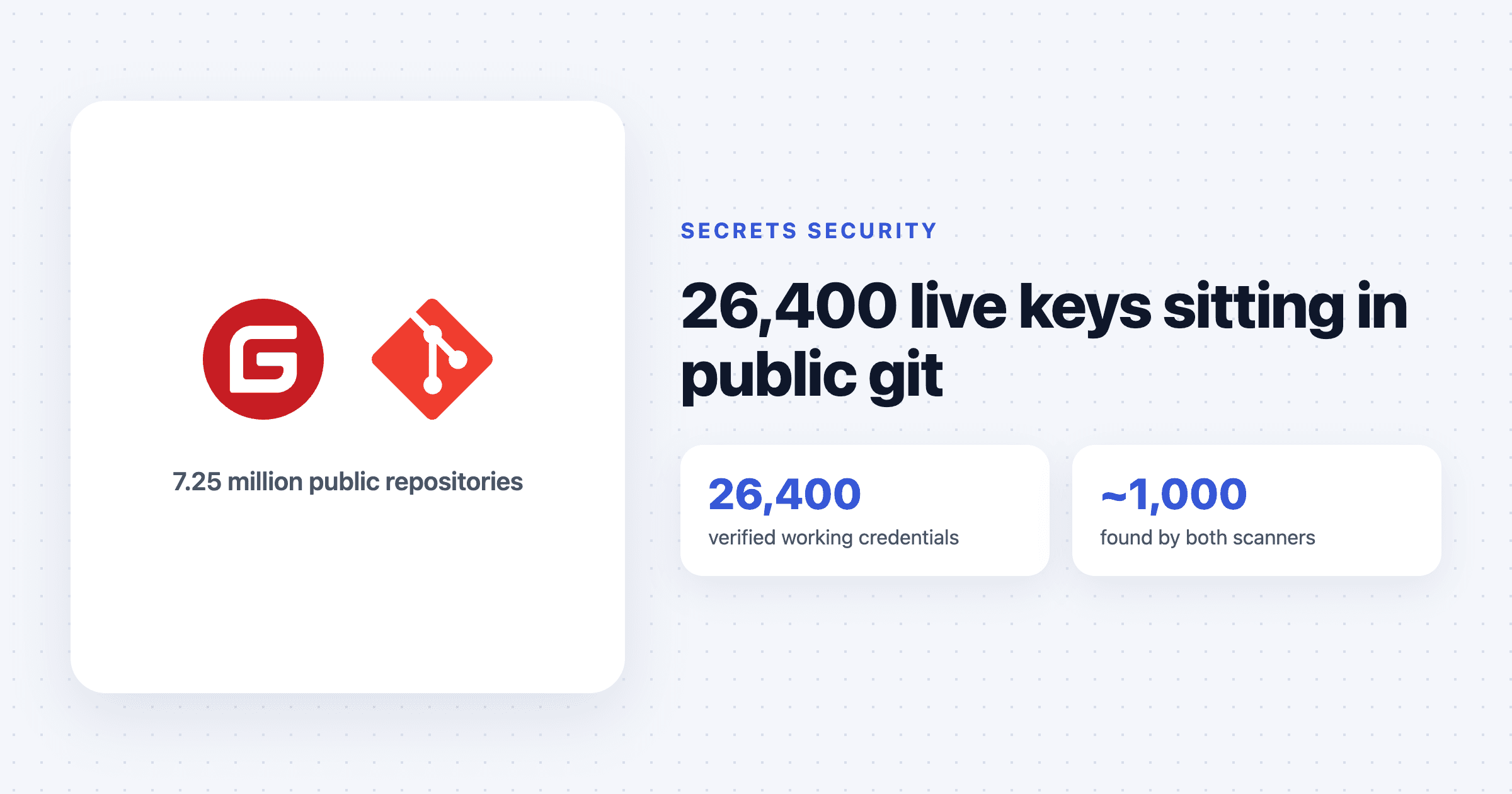
7,256,531 repositories scanned over about a month, for about $3,100 of serverless compute.
26,400 unique credentials that were verified live, meaning they actually authenticated against the vendor's service.
3.64 live credentials per thousand repos, higher than earlier published scans of GitLab and Bitbucket, though those used one tool.
Nearly half were committed in 2025. The problem is growing, not shrinking.
Alibaba Cloud access keys were the most common, about one in every 766 repos. Then came YouTube API keys and DeepSeek keys, followed by a long tail of AI services including OpenAI, Hugging Face, LangSmith, OpenRouter and Zhipu. The researchers also found an active organisation-admin credential for a major enterprise AI platform. Leaks came from personal email accounts and from corporate domains including Huawei, Microsoft and ByteDance.
Why did the two scanners disagree?
Each repo was scanned with both TruffleHog and Kingfisher, keeping only verified results. TruffleHog found 12,737. Kingfisher found 14,664. Only 1,001 were found by both.
The split follows each tool's detectors. TruffleHog led on Alibaba Cloud keys. Kingfisher led on DeepSeek, OpenAI, Hugging Face and Chinese AI services that TruffleHog has no detector for. Running both found roughly twice what either found alone.
This is the lesson that travels. A secret scanner is a list of patterns for the services its authors thought about. If your teams have adopted new AI providers this year, your scanner may not know about them yet.
What else stood out?
History keeps secrets alive. Many keys had been removed from the current file but stayed in commit history, where anyone who clones the repo can read them.
Platform partnerships matter. GitHub runs secret scanning partnerships that alert providers and revoke leaked keys. Gitee has no public equivalent, so keys stay valid.
Disclosure is uneven. Some vendors have no security contact or bug bounty, which leaves no clean way to get a leaked key revoked.
What should you do in your own organisation?
Run more than one scanner, or at least check that yours covers every provider your teams use, especially AI APIs.
Verify findings. Checking whether a key is live cuts the noise and tells you what to rotate first.
Scan history, not just the latest commit, and rotate any key that ever appeared, even if it was deleted in the next push.
Block at push time. Pre-commit hooks and platform push protection stop most leaks before they become history.
Prefer short-lived credentials. Workload identity and OIDC tokens that expire in minutes are worthless by the time a scanner finds them.
Watch AI keys like cloud keys. A leaked model API key can run up a bill or expose prompts and data. Give them owners, budgets and rotation.
Quick answers
How many secrets were found in the Gitee scan?
The scan of 7,256,531 public Gitee repositories found 26,400 unique credentials that were verified as live, about 3.64 per thousand repositories.
Is one secret scanner enough?
Usually not. In the Gitee scan, TruffleHog and Kingfisher overlapped on only 1,001 of about 26,400 live credentials, because each tool has detectors for different vendors.
Does deleting a secret from a file remove the leak?
No. The secret stays in git history, where anyone with a clone can find it. Leaked credentials should be revoked and rotated, not just deleted.