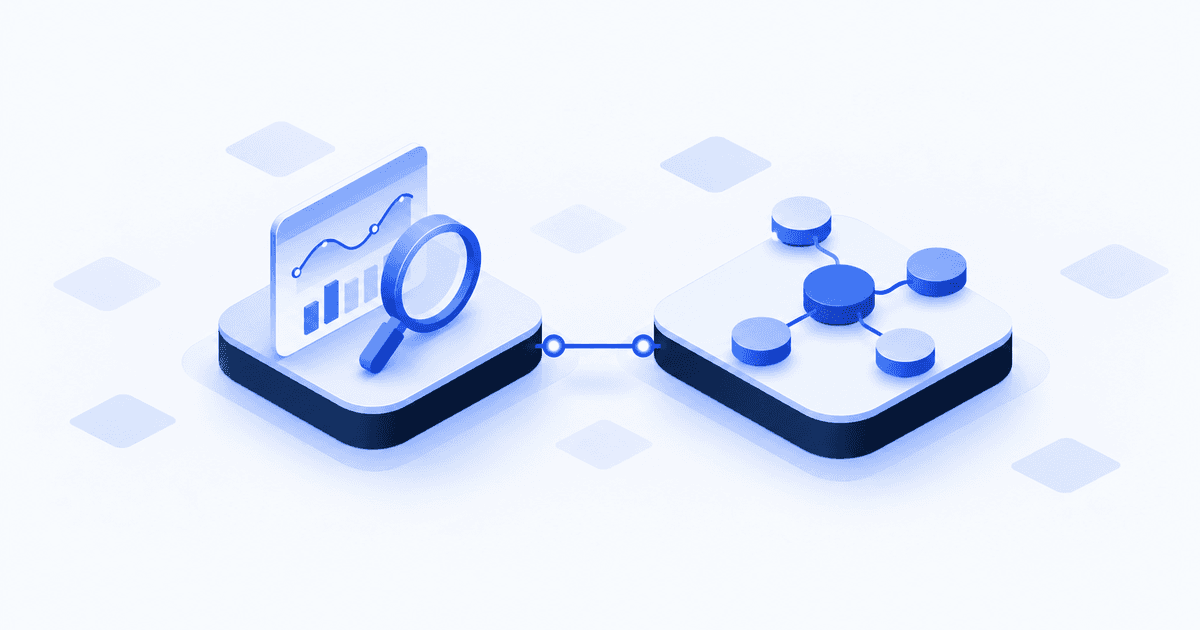
Dynatrace completed its acquisition of Arize on 1 October. The deal was announced in August at a reported $915 million in cash and stock, and it is the largest bet so far that watching an AI system is a different job from watching the software around it.
It lands in the same fortnight that New Relic appointed a chief executive who spent her last job running observability at Amazon Web Services. Two of the larger independent observability companies made their biggest move of the year within days of each other, and both moves point at the same thing.
What Dynatrace actually bought
Arize makes tools for people building AI applications rather than for people running servers. Its open source project, Phoenix, lets a developer trace what an AI application did, step through the path an agent took, run evaluations against the output and compare one experiment with another. Arize AX is the managed version of the same workflow for production use. The founders, Jason Lopatecki and Aparna Dhinakaran, move across with the company.
Dynatrace says both products stay available on their own and Phoenix stays open source. The stated reasoning is worth quoting directly, because it is the clearest summary of the thesis: the disciplines required to build, run and improve AI have evolved separately, and the plan is to put them back together into what the company calls full lifecycle AI observability.
The question the deal is really about
Underneath the announcement is a bet with two possible outcomes, and the whole $915 million rests on which one is right.
The first is that AI observability is a product. On this reading, evaluating a model's output is so unlike checking whether a service returned a 500 that it needs its own tooling, its own data model and its own buyer, who is a machine learning engineer rather than someone carrying a pager. If that holds, Dynatrace has bought a category leader early and the price will look sensible in three years.
The second is that AI observability is a feature. On this reading, tracing an agent is just tracing with extra fields, evaluation is just assertions with fuzzier matching, and within two product cycles every observability platform ships it as part of the base offering while open source standards absorb the data model. If that holds, Dynatrace has paid a premium for an eighteen month head start.
Both outcomes have precedent. Distributed tracing was once a separate product and is now a checkbox. Security monitoring was supposed to collapse into observability and never quite did. Nobody outside the companies involved knows which way this one goes, and anyone telling you confidently is guessing.
What it changes for teams now
For most teams, nothing this quarter. Arize AX and Dynatrace are still sold separately and the integration is future work.
What is worth paying attention to is the shift in what gets measured. Traditional monitoring asks whether the system responded, how quickly, and whether it threw errors. None of those questions catch a model that answered fast, returned a clean result and was wrong. Evaluation is the part that catches it, and evaluation needs a judgment about correctness that no latency graph contains.
If your organisation is putting AI features into production, the practical question is not which vendor to buy. It is whether anyone currently owns the answer to "is this output any good", and whether that person has a tool or a spreadsheet. In most places we talk to, it is a spreadsheet, and it belongs to whoever shipped the feature.
What to watch
Whether Phoenix stays genuinely independent. Open source projects acquired alongside their commercial parent have a mixed record, and the pace of outside contribution over the next year will say more than any press release.
Whether the pricing follows the usual path. AI observability data is heavy, traces of agent runs are large, and ingest based pricing has a way of turning useful instrumentation into a budget conversation.
Whether OpenTelemetry absorbs the data model. If the open standard grows a common shape for agent traces and evaluations, the moat around any single vendor's format gets shallower quickly.
What the rest of the field does next. Two large moves in two weeks is a pattern, and the companies that have not moved are now visibly the ones that have not moved.
For the layer underneath all of this, our guide to AI infrastructure covers what actually runs when a model serves a request.
Sources: Dynatrace's announcement of the completed acquisition, 1 October 2026, and contemporaneous reporting of the deal value from August 2026.